“Uptime isn’t about how fast a single machine can run. It’s about how the system behaves when something changes. Recovery dynamics, interaction between machines, and how quickly the line stabilizes are what ultimately define performance.”
— Brad Breuker, Director of Applications & Business Development, IPM
IPM developed its Line Performance Simulator to show how equipment decisions affect overall line performance. By comparing scenarios such as sizing equipment to match nominal filler speed, replacing a lower-efficiency machine center, or adding properly sized accumulation, manufacturers can see how different approaches affect overall equipment effectiveness (OEE). These comparisons help manufacturers evaluate whether a proposed equipment investment will deliver the expected improvement in overall line performance.
Budget for More Than the Equipment Purchase
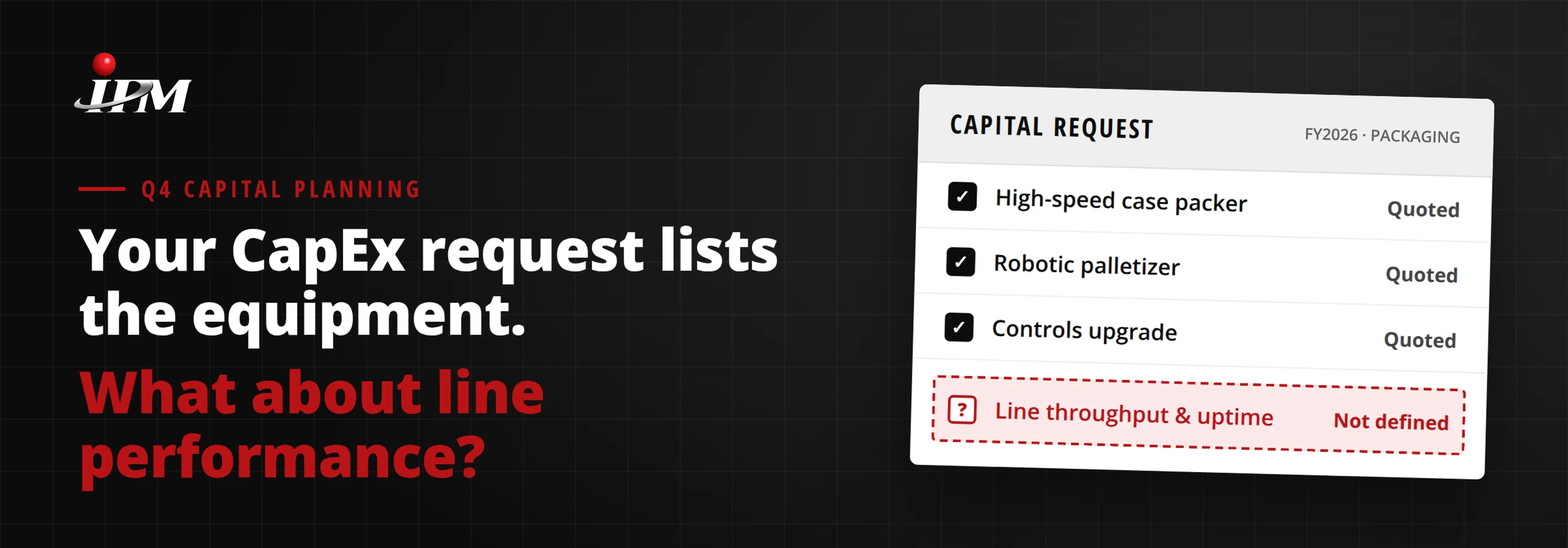
Even when the right equipment has been identified, the purchase price may not reflect the full cost of achieving the expected line performance.
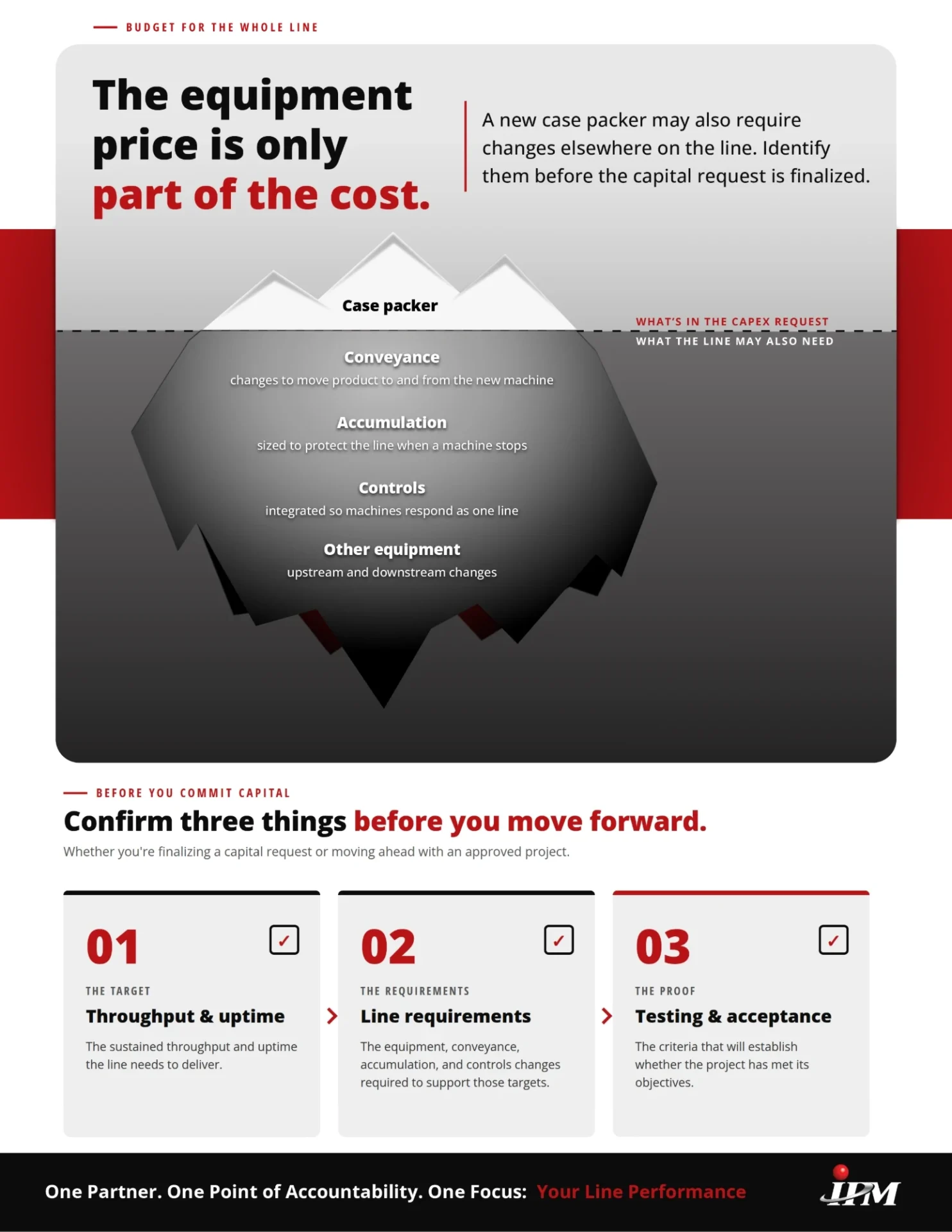
A new case packer, for example, may also require changes to conveyance, accumulation, controls, or other equipment. If those requirements aren’t identified early, the project risks exceeding its approved budget or facing costly changes and delays.
As an OEM-neutral packaging line integrator, IPM helps manufacturers evaluate equipment options and identify integration requirements before finalizing capital decisions. As the single accountable integration partner, IPM coordinates the equipment, engineering, controls, and automation needed to deliver the complete packaging line.
Before You Move Forward with Your Capital Investment
Whether you’re finalizing a capital request or preparing to move forward with an approved project, confirm three things:
- The sustained throughput and uptime the line needs to deliver.
- The equipment, conveyance, accumulation, and controls changes required to support those targets.
- The testing and acceptance criteria that will establish whether the project has met its objectives.
Even if installation is planned for 2027, decisions made now build a stronger foundation for execution.
Let’s Talk About Your Q4 CapEx Plans
Have an equipment investment you’re ready to move forward with? IPM can help evaluate the proposed solution, define the integration requirements, and coordinate the work needed to deliver the expected line performance.
One Partner. One Point of Accountability. One focus: Your Line Performance.