

Integrated Packaging Automation for Ice Cream

Ice cream packaging lines are built around continuous product flow, where stopping production creates risk to throughput and product loss. Continuous high-speed production, limited floor space, and the need to move product quickly into hardening all influence how downstream systems are designed and how product moves through the line.

Integrated Packaging Automation for Ice Cream

Ice cream packaging lines are built around continuous product flow, where stopping production creates risk to throughput and product loss. Continuous high-speed production, limited floor space, and the need to move product quickly into hardening all influence how downstream systems are designed and how product moves through the line.

Overcoming Ice Cream Packaging Line Challenges

Ice cream packaging lines are shaped by how product moves through the system. High-speed production, hardening requirements, and limited floor space influence how downstream equipment is configured and how flow is managed. Differences in product format, from frozen novelties to pints and bulk containers, introduce variation in handling and packaging approach. IPM designs systems around these conditions to maintain consistent flow and reliable performance.

CHALLENGE
THE IPM SOLUTION

Continuous Product Flow and Waste Risk

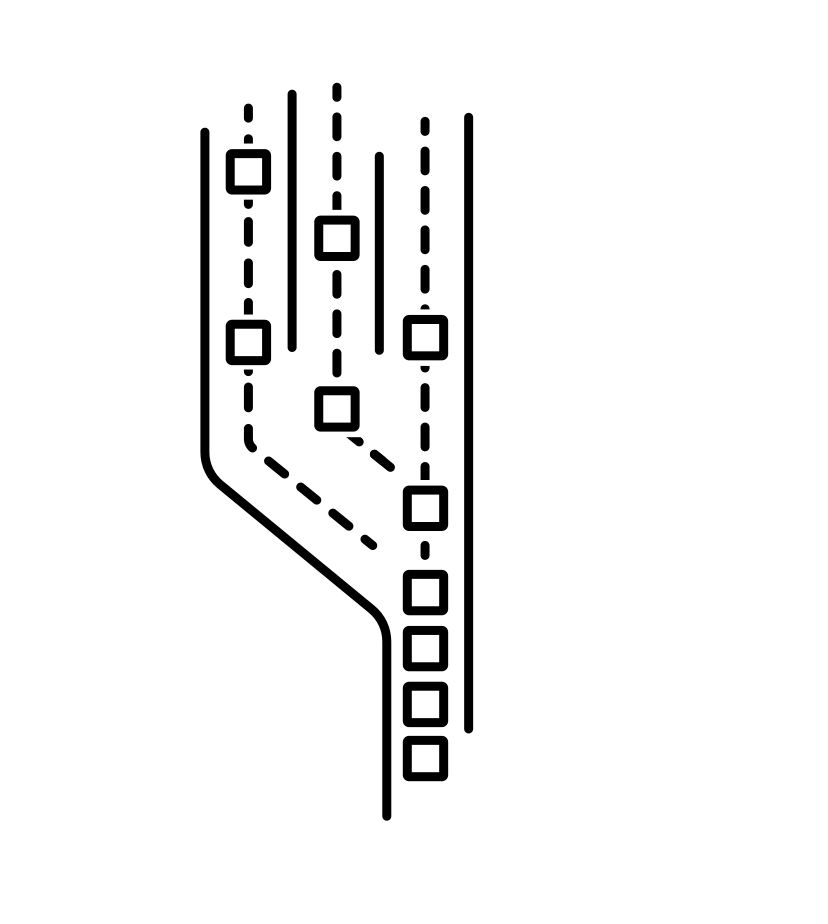
High-speed ice cream processing  lines continue running even when downstream equipment stops. This is especially critical on frozen novelty lines, where products continue moving at very high speeds, and interruptions can create immediate product loss.

Redundant Throughput Capacity

To maintain continuous flow during interruptions, additional downstream capacity is built into the line to keep product moving and reduce the risk of product loss on high-speed operations.

Hardening and Flow Timing Constraints

Ice cream must move quickly from the filler into the spiral freezer, or hardener. Delays in downstream handling can disrupt this timing and affect overall line performance.

Coordinated Transfer to Hardening

System layout and equipment timing move product efficiently from the filler into the spiral freezer, or hardener, minimizing delays that affect line performance.

System Continuity Constraints

Ice cream hardening systems operate continuously and are not easily stopped. When downstream equipment cannot keep pace, product must be managed in real time to avoid disruption or product loss.

Product Routing and Flow Paths

Lines are designed with defined paths to move, divert, buffer, or clear product when downstream equipment cannot keep pace, reducing manual handling and maintaining operation.

Limited Floor Space

Many ice cream facilities operate in constrained environments, where available space limits layout, equipment selection, and overall system design.

Iterative Layout Development

Layouts are developed through a structured process to fit equipment, flow, and access within the available footprint.

Product Format and Condition

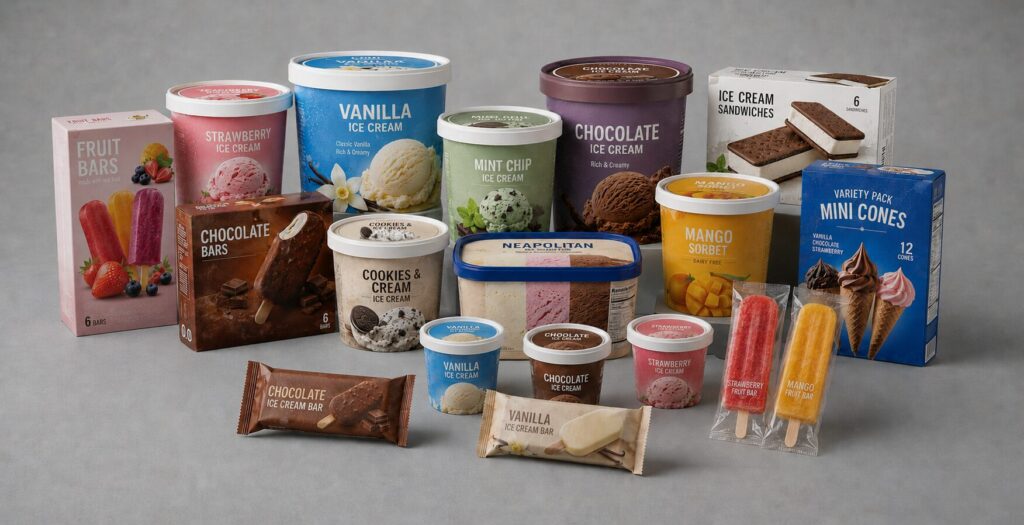
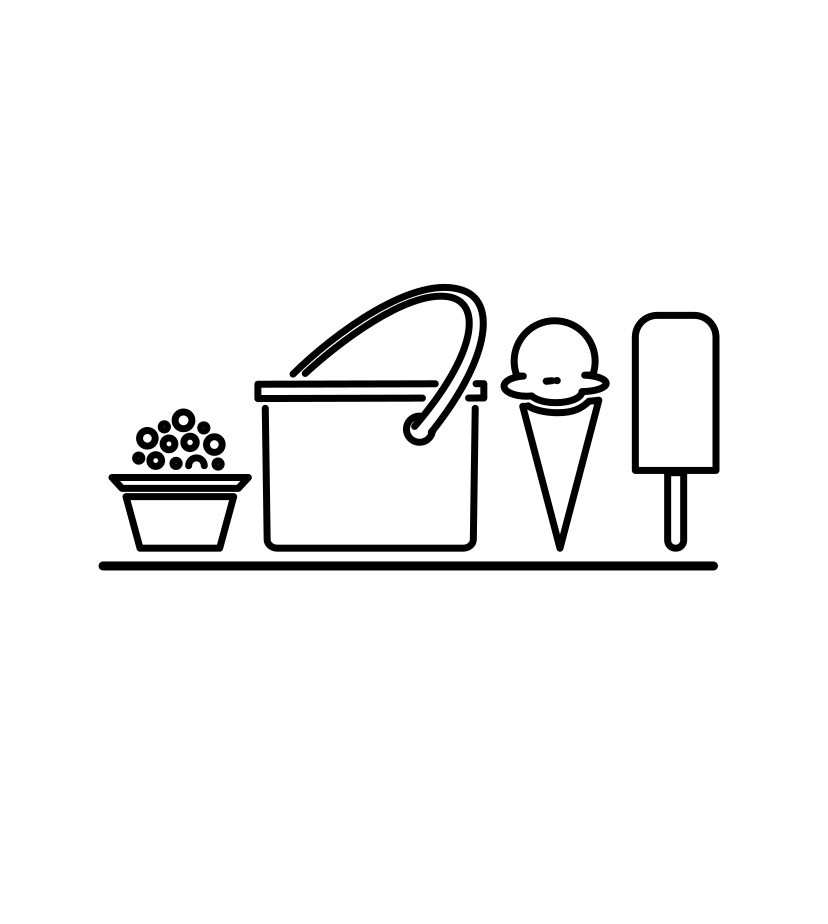
Ice cream products vary by format and condition, from novelties to pints and bulk containers, and from soft product at the filler to fully hardened product. These differences affect handling, accumulation, and packaging. approach.

Format-Specific Handling Strategy

System design adjusts handling, accumulation, and packaging approach based on product format and condition, from novelties to pints and bulk containers.

Continuous Product Flow and Waste Risk

High-speed ice cream packaging lines continue running even when downstream equipment stops. This is especially critical on frozen novelty lines, where interruptions can create immediate product loss.

Additional downstream capacity keeps product moving during interruptions and reduces the risk of product loss on high-speed lines.

Hardening and Flow Timing Constraints

Ice cream must move quickly from the filler into the spiral freezer, or hardener. 

System layout and equipment timing move product efficiently into the hardener, minimizing delays that affect product integrity and line performance.

System Continuity Constraints

Ice cream hardeners operate continuously and are not easily stopped. 

Defined product paths allow lines to move, divert, or clear product when downstream equipment cannot keep pace, reducing manual handling and maintaining operation.

Limited Floor Space

Many ice cream facilities operate in constrained environments, where available space limits layout, equipment selection, and overall system design.

Layouts are developed to fit equipment, flow, and access within the available footprint.

Product Format and Condition

Ice cream products vary by format and condition, from novelties to pints and bulk containers, and from soft product at the filler to fully hardened product. 

System design adjusts handling, accumulation, and packaging approach based on these differences.

Conveyor Supports

IPM in Action: Block Cheese Line

A cheese producer needed to merge two lines while protecting deformable 40 lb blocks and meeting strict weighing, labeling, and palletizing requirements within a tight footprint. IPM engineered a unified system with gentle handling, accurate manifest tracking, heavy-payload robotic palletizing, and automated labeling

Engineer Performance into Every Line

The System Behind Line Performance

OEM-Neutral Integration

Machine types, sequencing, line layout, and performance requirements are evaluated and specified to support stable line performance based on application and operating requirements.

V-Curve System Design

Performance targets are defined first and validated against how the full downstream system performs under operating conditions.

Performance Guarantee

Defined scope, disciplined execution, and structured startup testing align delivered performance with agreed requirements.

EQUIPS Training

Customized training builds operator and maintenance competency to support consistent operation and effective troubleshooting.

Trends Shaping Ice Cream Packaging

Smaller sizes and single-serve formats are increasing the volume of products moving through ice cream packaging lines. At the same time, growth in frozen novelty formats is driving higher throughput requirements on already high-speed operations. These shifts increase the need to maintain continuous flow and manage product effectively through downstream systems.

Alex Karr

Sales Engineer, IPM

Engineer Performance into Every Line

Partner with IPM to assess your ice cream packaging line and identify system-level improvements to throughput, flow management, and operational reliability.

Ice Cream Packaging Automation FAQs

How are ice cream packaging lines designed to manage continuous product flow?

Ice cream production often runs continuously, especially for novelty formats. Downstream packaging systems must be designed to keep product moving, even when equipment stops. This includes throughput capacity, defined product flow paths, and reduced reliance on stopping upstream processes.

How do different ice cream formats affect packaging line design?

Ice cream products vary by format and condition, from novelties to pints and bulk containers. These differences affect how products are handled, accumulated, and packaged, requiring system design to adapt to each format and production requirement.

What challenges affect ice cream packaging line performance?

Ice cream packaging lines must manage continuous product flow, high speeds, and limited floor space. Because production does not easily stop, systems must be designed to maintain flow, manage product effectively, and reduce the risk of product loss during interruptions.

Scroll to Top