
IPM IN ACTION
How IPM Took Two Plant-Based Protein Packaging Lines from Concept to Salable Production in Six Months
When a leading manufacturer of frozen plant-based protein products needed to quickly expand production capacity, speed to market was critical. Growing demand was creating an urgent need to get more product to market.
6
Months from concept to salable production
6,000
Pounds per hour designed throughput
60
Bags per minute, approximate bagging rate
2
Packaging lines for multiple products and package configurations
INDUSTRY
Frozen prepared foods, Plant-based protein
APPLICATION
Frozen plant-based protein, Premade bags
EQUIPMENT SCOPE
PROJECT OVERVIEW
The project involved adding two new packaging lines during a significant renovation of the manufacturer’s existing facility. Production continued on an existing line throughout the project, adding another layer of complexity to the expansion.
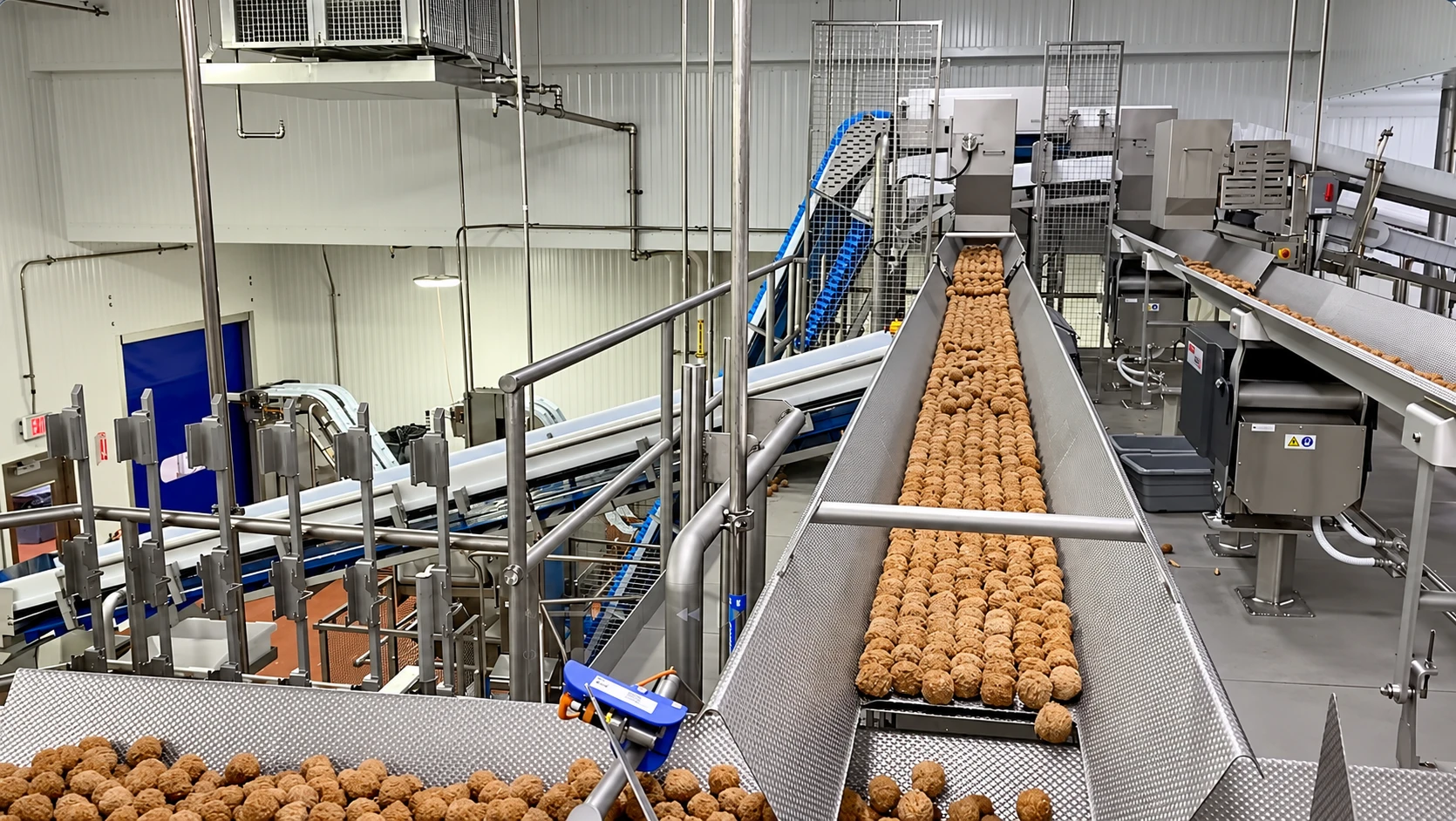
The new lines would package a range of frozen plant-based products, including tenders, nuggets, meatballs, ground product, patties, and fillets, with different handling requirements and package configurations. Designed for up to 6,000 pounds of product per hour, the systems needed the flexibility to accommodate those product variations within the available space.
From concept to salable production, IPM had six months to deliver.
The Problem
Managing Unprecedented Challenges
Meeting the six-month timeline required careful sequencing across equipment suppliers, facility work, installation, and startup. The bagging equipment was supplied from Japan, adding another layer of technical and logistical complexity to the project.
Then, as the project moved toward installation, COVID-19 disrupted travel and supply chains. Equipment had reached the United States before restrictions intensified, but material availability, technician access, testing requirements, and changing travel protocols created new obstacles to installation and startup. IPM adapted project plans as conditions changed, working closely with suppliers and the manufacturer to keep critical activities moving forward.
Despite the unforeseen disruptions, the manufacturer’s target date for salable production did not change. Neither did IPM’s commitment to deliver.
IPM’s Solution
Engineering for Product and Packaging Flexibility
The two new lines needed to accommodate products with significantly different handling characteristics. Meatballs could roll as they moved across conveyors, for example, while ground product and formed products required different conveying parameters. IPM developed product-specific recipes that adjusted conveying and handling parameters for each product.
Product and package variety also influenced the level of automation. Although IPM would typically automate case packing for an application like this, the number of package sizes and limited available space made manual case packing the better fit. It was an application-specific decision based on the manufacturer’s requirements, facility, and project budget.
Integrated Packaging Line Equipment
The two packaging lines integrated:
- Spiral freezer discharge conveyance
- Vibratory product distribution
- Rotary weighing and premade bag filling systems
- Metal detection and checkweighing systems
- Bag conveyance and merging
- Manual case packing
- Case forming, sealing and conveyance
- Integrated controls and HMIs
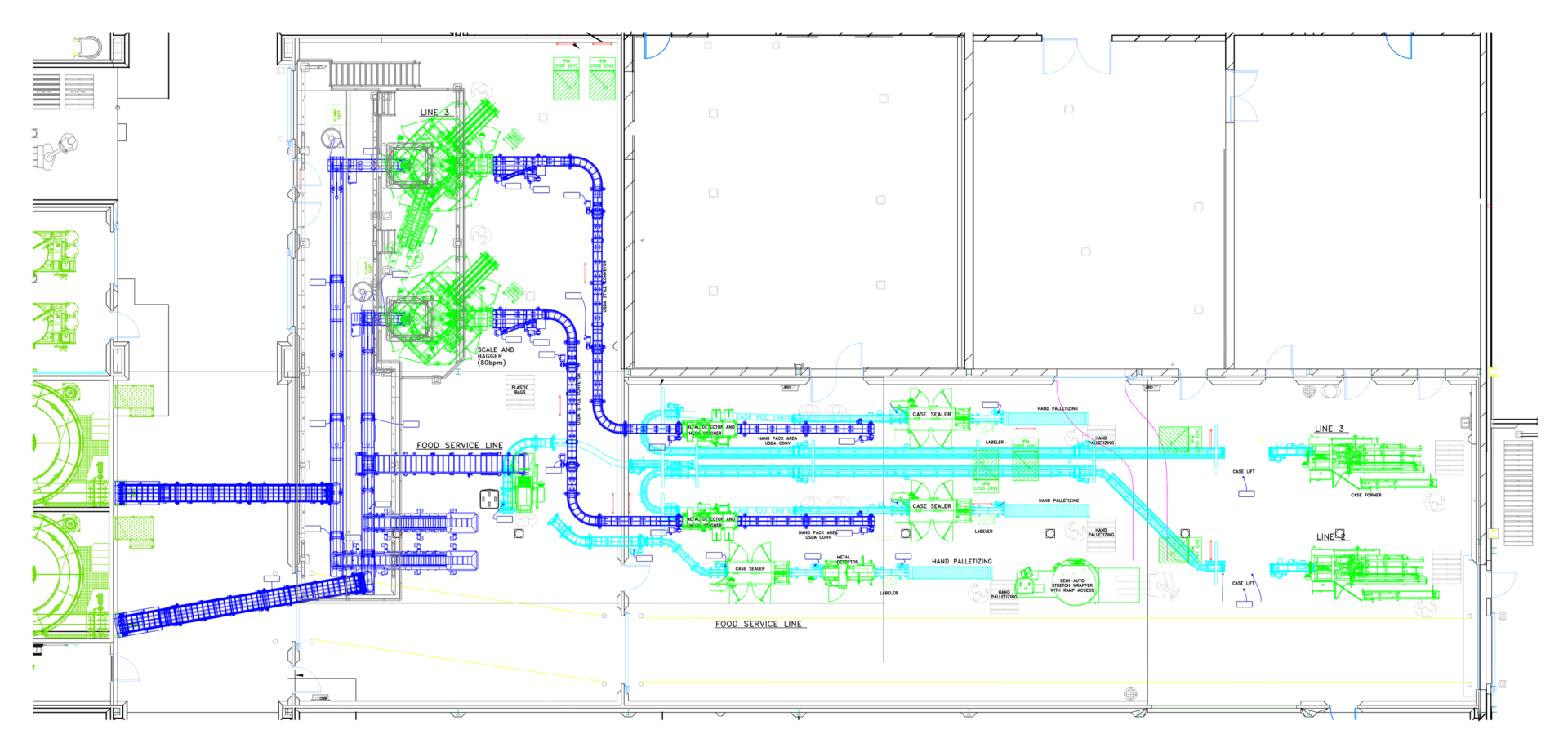
Developing a 2:1 Merge Conveyor
The bagging equipment discharged finished bags two at a time, but carrying two separate conveyor lanes through to case packing would have added unnecessary downstream conveyance. IPM developed its first 2:1 merge conveyor to combine the dual-lane discharge into a single product stream without stopping product flow.
Flexible packaging added complexity to the merge. Bag edges could catch on conveyor components, and bags could turn, shift, or become wedged as the two streams came together. IPM designed the system around those package characteristics, using conveyors operating at different speeds and a powered side rail to sequence and guide the bags into a single lane.
What began as a solution to a specific challenge on this project became a proven IPM approach. Today, IPM regularly uses 2:1 merge technology to manage product flow across a range of packaging systems.
Proactively Navigating Challenges
As installation and startup progressed, keeping the project on schedule required a disciplined approach to project execution and constant coordination among the manufacturer, IPM, and equipment suppliers. IPM managed changing schedules and technical requirements, coordinated OEM technicians as equipment became ready for commissioning, and kept the manufacturer’s corporate engineering team informed as COVID disruptions affected travel, personnel availability, and access to materials and components.
Communication was central to that coordination. As issues emerged, IPM communicated what was happening, the potential impact on the project, and the steps being taken to resolve it.
IPM’s approach became especially important when issues surfaced during startup. Inconsistent quality in the premade bags caused repeated problems with the bagging equipment. Some arrived with improperly formed seals, missing zippers, scarring, or other defects, and multiple defective bags entering the machine in succession could stop the line.
Working with the manufacturer’s quality team, IPM adapted the system so incoming bag defects would not unnecessarily stop production. The issue was resolved without allowing a supplier-quality problem to derail startup or jeopardize the manufacturer’s production date.
This same focus on proactive communication and problem-solving helped keep a complex project on track despite circumstances no one could have anticipated.
The Result
Reaching the Market in Six Months
Six months after the project began, the two new packaging lines reached salable production, meeting the accelerated timeline established at the outset.
The completed system gave the manufacturer additional capacity to package a broad range of frozen plant-based products, with product-specific recipes supporting different handling requirements. The lines were designed for up to 6,000 pounds of frozen product per hour, with bagging rates of approximately 60 bags per minute and multiple case configurations supported downstream.
Critically, the additional capacity came online in time for the manufacturer to meet growing market demand.
Delivering at the Speed the Market Demands
Accelerated timelines leave little room for disconnected decisions, delayed communication, or unresolved issues. Success depends on keeping engineering, equipment suppliers, facility requirements, installation, and startup aligned from concept through production.
Across the project, IPM adapted to changing conditions, kept critical activities moving forward, and maintained a clear focus on line performance.
One integrated project. One accountable partner. Two new packaging lines in salable production in six months.
“There are always going to be challenges on a project. The key is not to ignore them. We identify the issue, communicate what’s happening, and focus on the solution so we can keep the project moving forward.”

Engineer Your Packaging Line
for What’s Next
One partner. One point of accountability. One focus. Your line performance.