The future of food packaging is shaped by advances in smart packaging, sustainable materials, automation, and food preservation technologies. Manufacturers seek food packaging solutions that improve food safety, extend shelf life, reduce waste, and meet retailer and regulatory requirements, while aligning with evolving consumer preferences.
While the core technologies behind these platforms have not changed significantly, what has changed is how food packaging innovation is evaluated. In today’s production environments, performance, or OEE (Overall Equipment Effectiveness) under real operating conditions matters more than novelty. Rather than asking what a technology can do, manufacturers are asking how reliably it performs at line speed, within existing systems, and without compromising uptime.
How Food Packaging Innovation is Evaluated in 2026
Many of the technologies shaping food packaging innovation in 2026 are familiar: smart packaging, sustainable materials, automation, and advanced food preservation methods have been evolving for years.
Food packaging solutions are defined less by individual features and more by their reliability within the system as a whole. Innovation still matters when it improves OEE, runnability, protects throughput, and delivers predictable results over time.
That shift has changed the questions manufacturers ask before committing to new technology:
- Will this technology run consistently at production speed, not just in controlled trials?
- How does it interact with existing equipment, controls, and line layouts?
- What impact does it have on uptime, changeovers, and recovery after a stop?
- Can operators and maintenance teams support it without specialized intervention?
- Does it reduce operational risk or introduce new points of failure?
Smart Packaging in Food Packaging Innovation
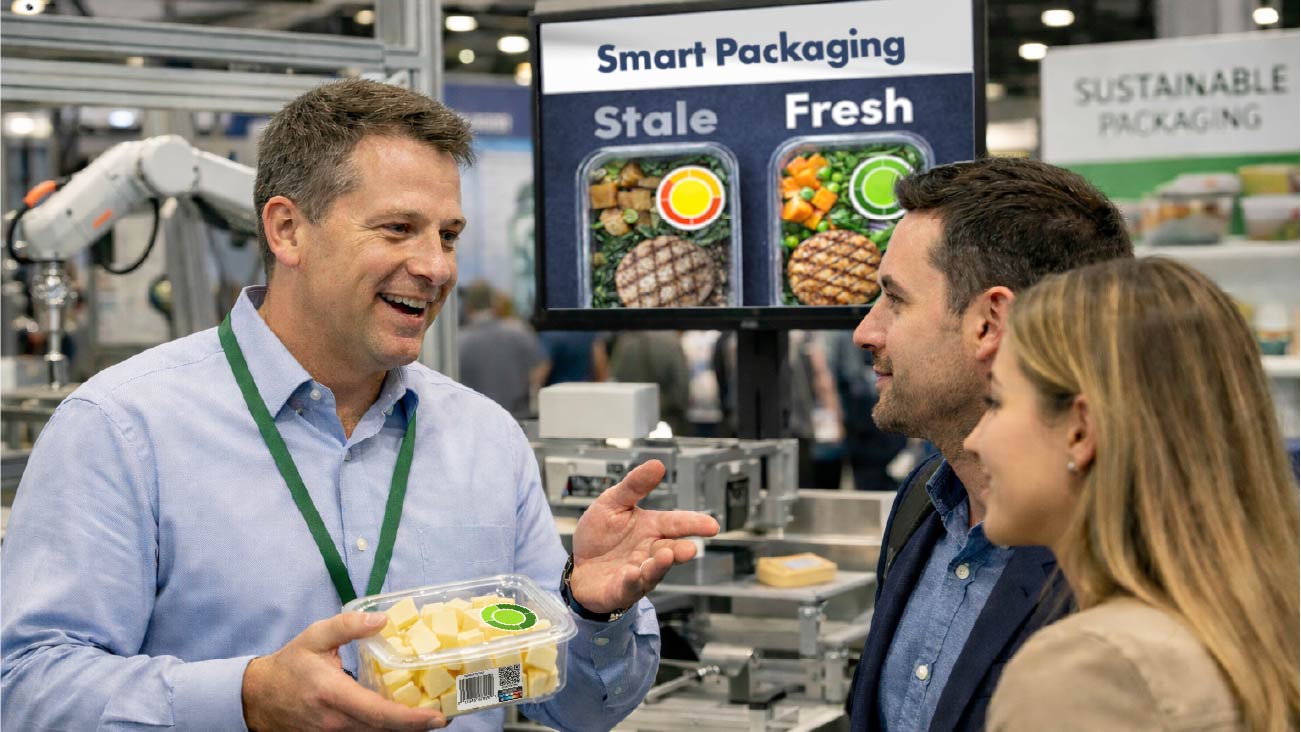
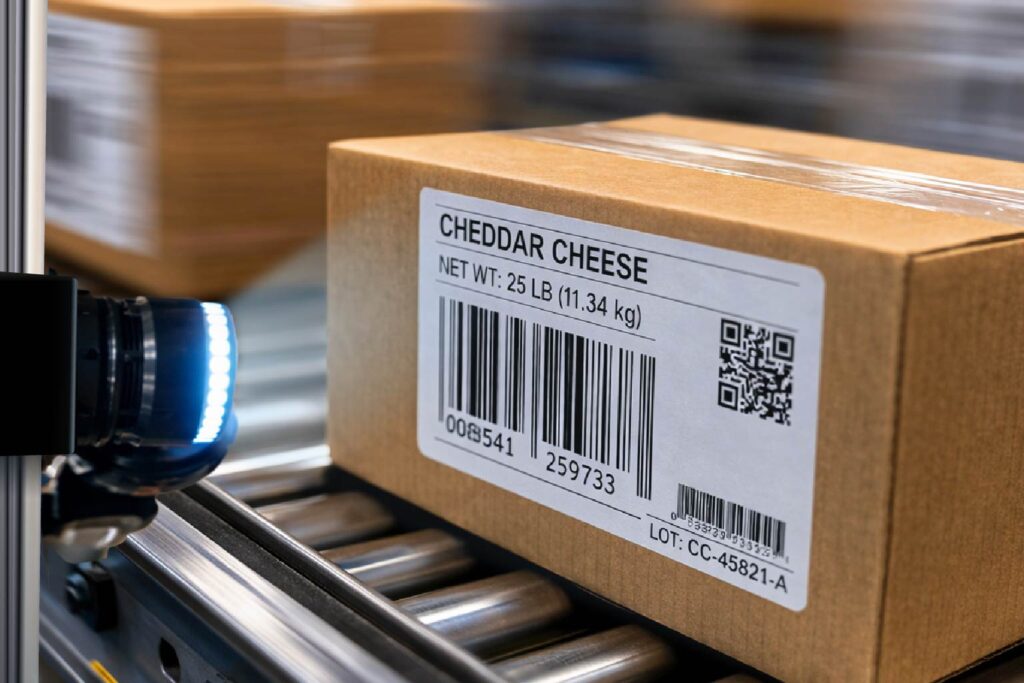
Smart packaging remains a visible area of food packaging innovation in 2026, but the conversation is becoming more practical and operational. One of the clearest shifts is the move toward 2D barcodes and richer digital identity directly on-pack. As packaging carries more traceability, recall, and compliance data, manufacturers must evaluate how that information is printed, verified, and used without disrupting production.
This evolution moves smart packaging away from isolated discussions about sensors and connected labels and toward machine-readable packaging data that interacts with the entire packaging system. Code placement, print quality, scan reliability, serialization, and verification now have direct implications for inspection systems, reject logic, and line speed.
As food packaging solutions become more data-enabled, integration across the packaging line becomes critical. Smart packaging cannot function as a standalone feature. It must operate cohesively with printing systems, vision inspection, controls architecture, and quality workflows. When data architecture is disconnected from line design, throughput and reliability are affected.
In 2026, smart packaging is evaluated by how well it:
- Integrates seamlessly cleanly with inspection, reject, and control systems across the line
- Supports traceability and verification without slowing line speed
- Maintains print and scan reliability under real production conditions
- Enables faster response when quality or handling conditions fall outside acceptable limits
Sustainable Food Packaging in 2026
Sustainable food packaging solutions in 2026 are evolving less through the appearance of entirely new materials and more through growing pressure to make sustainable formats commercially and operationally viable. Environmental responsibility remains a priority for brands, retailers, and consumers, but it is now reinforced by policy and compliance requirements.
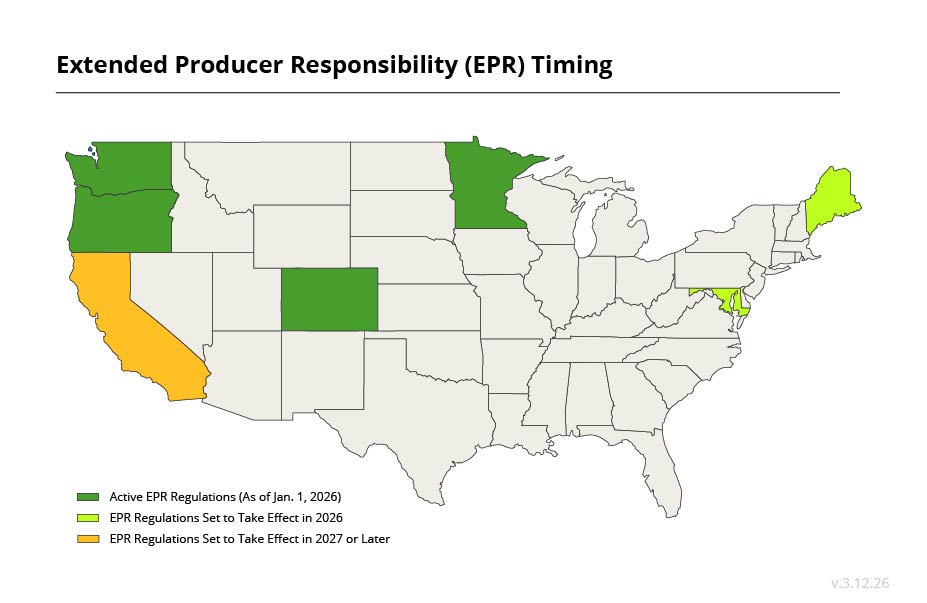
Expanded Producer Responsibility (EPR) regulations are increasingly shaping packaging decisions across regions. Producers must track obligations across jurisdictions rather than treat sustainability as a uniform national decision. As compliance requirements evolve, manufacturers evaluate whether existing formats remain practical, cost-effective, and aligned with regional mandates.
At the same time, material engineering continues to address long-standing tradeoffs between recyclability and performance. Advances in barrier coatings, downgauging, seal design, and mono-material construction are improving the ability of sustainable formats to withstand the demands of filling, sealing, distribution, and shelf life.
Those developments shift sustainability from a materials conversation to a systems conversation. The practical question is not simply whether a greener material can be sourced. It is whether that format can run at speed, maintain seal integrity, and avoid fragmenting operations into parallel programs by channel or geography.
- Sustainability initiatives that succeed are designed into packaging operations rather than layered on afterward.
- Production teams assess sustainable packaging based on its ability to:
- Implement without extensive equipment modification
- Run consistently at target speeds
- Maintain seal integrity and package quality
- Avoid increases in scrap, rework, or unplanned downtime
Advanced Food Preservation and Shelf Life
Extending shelf life remains a core objective of food packaging innovation in 2026, particularly for fresh, refrigerated, and ready-to-eat products. Active packaging, antimicrobial films, modified atmosphere systems, and packaging compatible with high-pressure processing continue to advance.
Increasingly, these preservation technologies are being engineered directly into packaging formats. Barrier performance, antimicrobial functionality, and oxygen management are increasingly being balanced against recyclability, material simplification, and machinability. Preservation decisions now include packaging format and line compatibility, not just food science.
The practical challenge is not simply achieving longer shelf life. It is doing so without introducing sealing instability, sanitation complications, slower changeovers, or downstream handling issues.
Preservation approaches deliver value when they are designed alongside packaging formats, materials, and line configurations. Technologies that complicate line setup or disrupt flow can undermine their own benefit.
In 2026, advanced food preservation is assessed based on how well it:
- Integrates seamlessly into existing packaging lines
- Maintains hygienic design and cleanability
- Preserves throughput during long runs and frequent changeovers
- Supports consistent package quality without adding operational risk
Automation and Robotics in Food Packaging
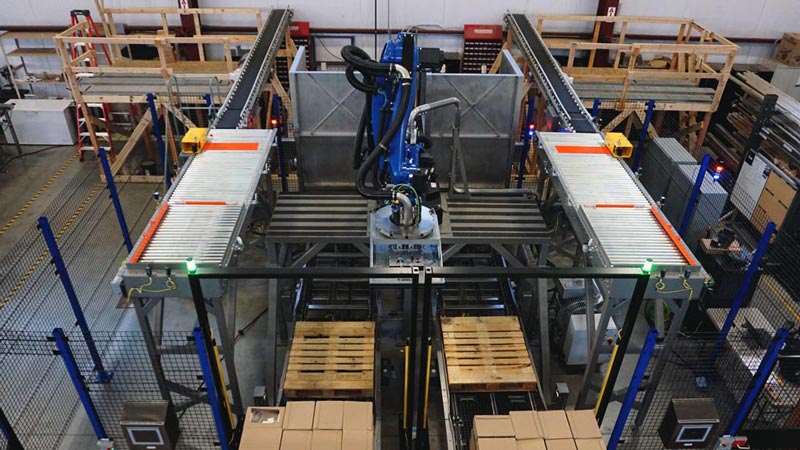
Automation and robotics remain central to food packaging solutions in 2026, but the demands placed on packaging lines are shifting. Shorter production runs, greater SKU variability, and faster changeovers are redefining what effective automation looks like. Automated and collaborative palletizing, vision systems and robotics are common across food packaging operations, but the expectation is no longer just throughput. It is adaptability.
The evolution is not simply toward more robotics. It is toward modular, recovery-friendly systems that maintain performance under higher variability. Automation and control solutions must support quick changeovers, enable predictable restart after faults, and provide for stable flow across upstream and downstream equipment.
For production teams, the value of automation is defined by control at target rates. Poorly integrated automation can increase stoppages and troubleshooting time. Well-applied automation improves control, runnability, simplifies recovery, and supports operator effectiveness across the system.
In 2026, automation is evaluated based on a clear set of operational conditions:
- Access to centralized machine-center, and line level performance data
- Reduce unplanned stops and micro-stoppages
- Support predictable recovery after faults
- Integrate cleanly with upstream and downstream equipment
- Maintain throughput under changing SKU and run-length conditions
Food Packaging Regulation and Labeling
Regulatory and retailer-driven labeling requirements are adding operational complexity to food packaging in 2026. Allergen disclosure, recyclability claims, traceability data, and market-specific labeling standards increase variation across SKUs and regions.
On the packaging line, that complexity shows up as tighter tolerances and less margin for error. Labeling performance has direct operational consequences, influencing inspection reliability, changeover risk, and throughput stability.
Packaging teams assess labeling capability based on:
- Accurate label application across multiple SKUs, formats, and markets
- Verification and inspection without introducing new bottlenecks
- Synchronization between filling, labeling, and downstream handling
- Prevention of mislabeling during changeovers and short runs
Flexibility and Changeover Efficiency
Flexibility has become a baseline requirement for modern food packaging solutions. The ability to quickly and accurately transition between formats, sizes, and SKUs without extended stoppages (i.e. contro) directly affects throughput, scheduling, and labor efficiency.
Changeover capability delivers value when it is designed into the packaging system rather than managed through manual intervention or workarounds.
Packaging teams assess flexibility and changeover efficiency based on:
- Time required to complete repeatable changeovers
- Consistency of changeover performance across shifts
- Ability to introduce new SKUs without reengineering the line
- Impact of format changes on upstream and downstream flow
Innovation at the Line Level
Food packaging innovation is defined by performance in real production environments. New capabilities create value when they support stable throughput, predictable changeovers, and consistent quality over time. In practice, innovation earns its place on the line by improving uptime.
Food Packaging Innovation and Solutions That Protect Uptime
Connect with an IPM expert to discuss system-level approaches to innovation that support reliable, high-performing packaging lines