
Integrated Packaging Automation for Cheese

Cheese packaging lines introduce unique sanitation demands and physical variability that place added pressure on downstream automation.

Integrated Packaging Automation for Cheese

Cheese packaging lines introduce unique sanitation demands and physical variability that place added pressure on downstream automation.

Overcoming Cheese Packaging Line Challenges

Cheese packaging lines face a distinct set of challenges driven by sanitation requirements, product variability, and physical form. Changes in moisture, density, and package geometry can disrupt downstream flow, while gas-flush behavior and limited accumulation options place added pressure on case packing and palletizing systems. IPM designs cheese packaging systems that maintain stable flow and consistent performance across variable products.

CHALLENGE
THE IPM SOLUTION

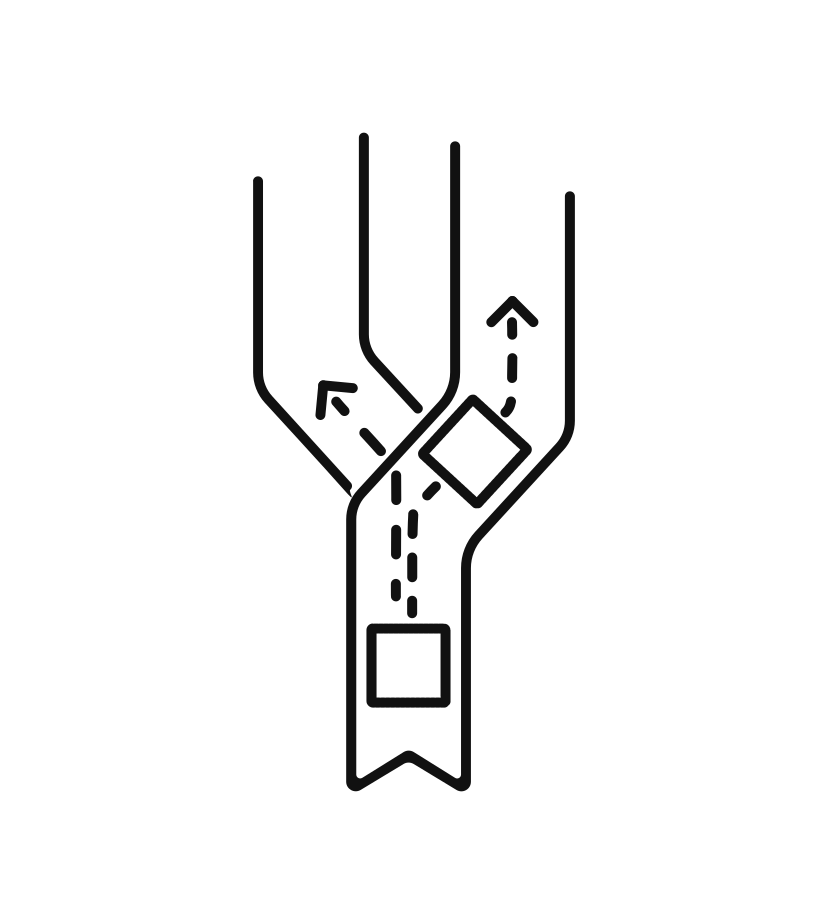
Density and Moisture Variation

Natural cheese varies in density and moisture, creating downstream handling challenges that affect package geometry and flow stability after filling.

Robust Downstream Handling

Downstream systems incorporate dimensional accuracy and robustness design to maintain stable flow and consistent performance despite upstream variation.

Gas-Flush Dimensional Change

Gas-flushed cheese packages expand immediately after sealing and shrink over time as gas is absorbed into the product.

Controlled Case Geometry

Case packing systems are engineered to accommodate post-seal expansion and shrink, preserving consistent case geometry through palletizing.

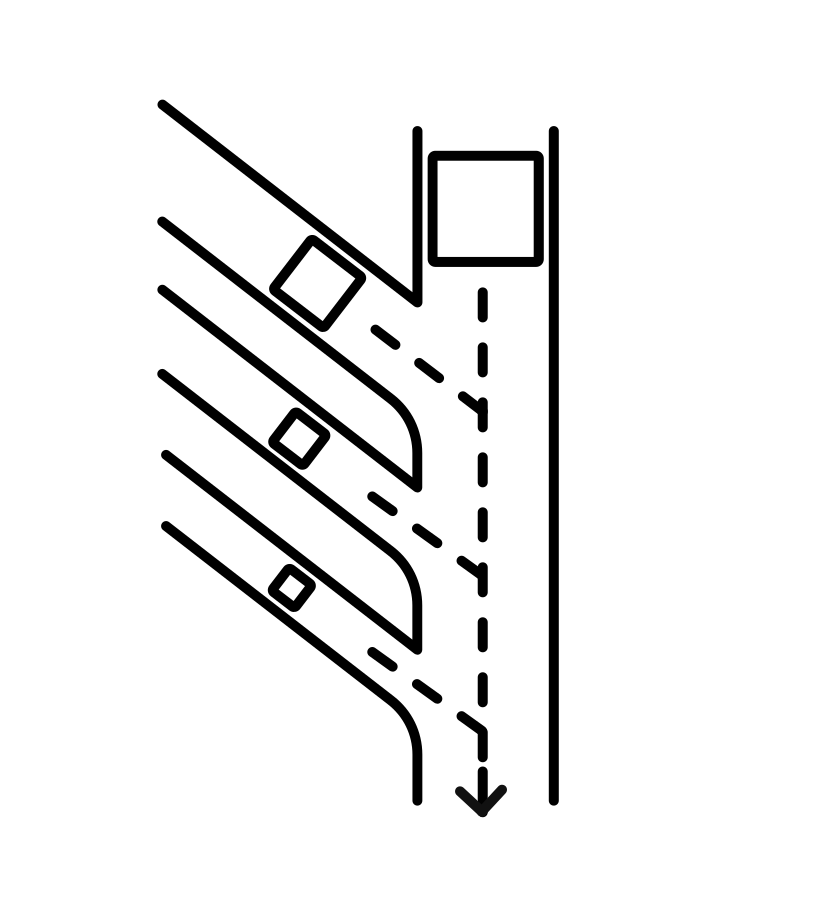
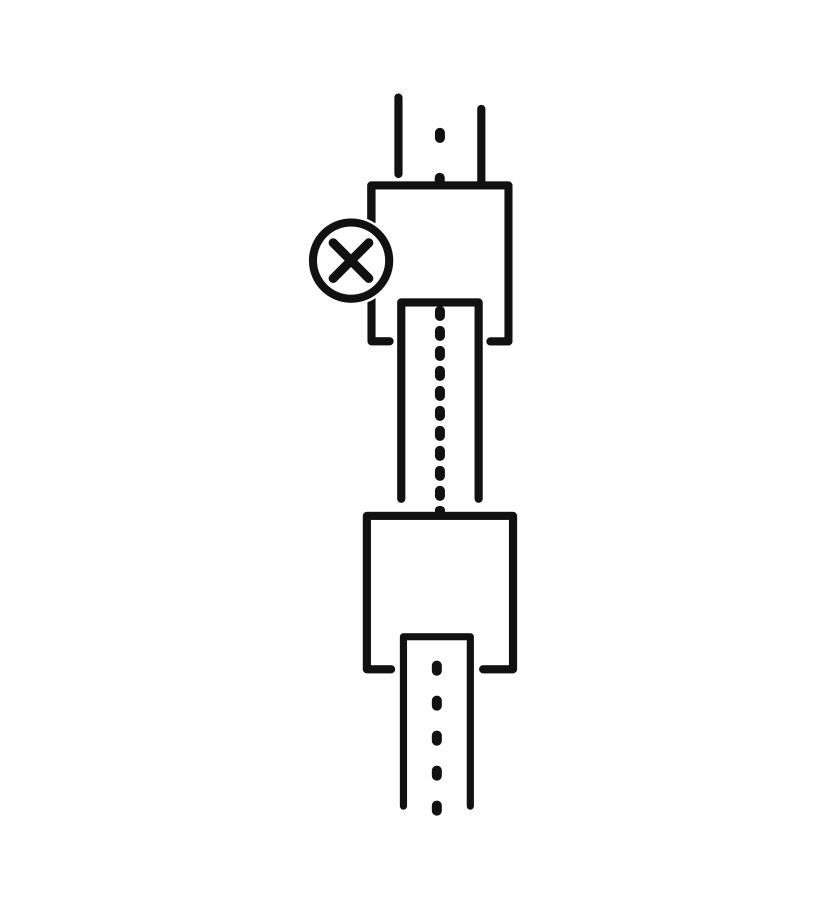
Limited Back-Pressure Tolerance

Many cheese packages cannot tolerate back pressure, limiting accumulation and forcing machine centers to operate in close-coupled configurations.

Seamless Line Architecture

Machine centers are intentionally syncronized using controls, buffering, and accumulation to manage interdependence and stabilize line performance.

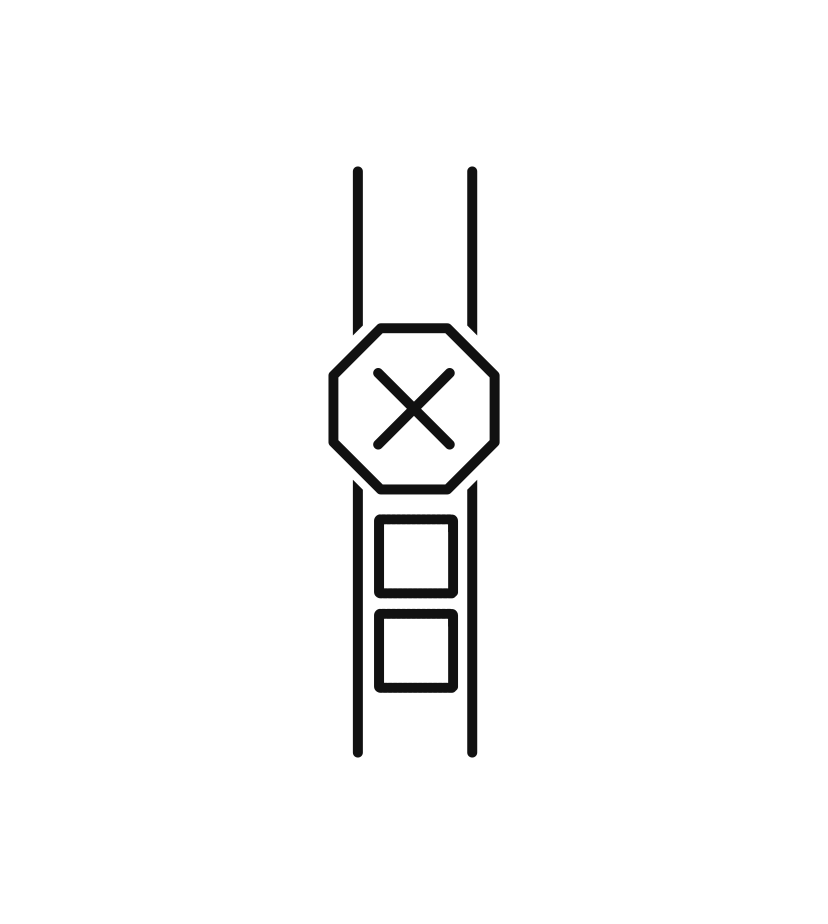
Close-Coupled Line Sensitivity

When downstream equipment stops, upstream machines are often forced to stop immediately, reducing overall line availability.

Continuity Through Redundancy

For high-volume operations, parallel downstream machine centers maintain production when one system is offline, preventing full-line stoppages.

Stringent Cleaning Requirements

Direct food contact, product residue, and frequent washdown increase sanitation demands. Complex geometries near cutting and slicing raise cleaning difficulty and uptime risk.

Accessibility for Maintenance, Sanitation and Repeated Washdowns

Open-frame construction, stainless components, and maintenance-accessible machine centers support thorough sanitation and repeated washdown while maintaining mechanical reliability and consistent performance

Density & Moisture Variation

Natural cheese varies in density and moisture, creating downstream handling challenges that affect package geometry and flow stability after filling. IPM engineers downstream systems with dimensional accuracy and robust design, allowing product variation to be absorbed without disrupting flow or compromising consistent line performance..

Gas-Flush Dimensional Change

Gas-flushed cheese packages can expand immediately after sealing and shrink over time as gas is absorbed into the product. IPM accommodates for these dimensional changes through controlled case packing and palletizing strategies that preserve consistent case geometry and downstream stability.

Limited Back-Pressure Tolerance

Many cheese packages are sensitive to back pressure, limiting accumulation and increasing susceptibility to downstream interruptions. IPM applies seamless line architectures that manage pressure through controlled accumulation, buffering, and coordinated controls to maintain package integrity and stable flow.

Stringent Cleaning Requirements

Direct food contact, product residue, and frequent washdown increase sanitation demands. Complex geometries near cutting and slicing raise cleaning difficulty and uptime risk. IPM approaches sanitation through system layouts that emphasize open-frame construction, stainless components, and maintenance-accessible machine centers, supporting repeated washdown while maintaining mechanical reliability and consistent performance.

Close-Coupled Line Sensitivity

When downstream equipment stops, upstream machines are often forced to stop immediately, reducing overall line availability. Where throughput and uptime demands justify it, IPM incorporates parallel downstream machine centers to maintain production during localized interruptions.

Conveyor Supports

IPM in Action: Block Cheese Line

A cheese producer needed to merge two lines while protecting deformable 40 lb blocks and meeting strict weighing, labeling, and palletizing requirements within a tight footprint. IPM engineered a unified system with gentle handling, accurate manifest tracking, heavy-payload robotic palletizing, and automated labeling

Engineer Performance into Every Line

The System Behind Line Performance

OEM-Neutral Integration

Equipment is selected to meet defined system requirements, so each machine center supports line performance without compromise.

V-Curve System Design

Performance requirements are defined first and validated against real-world system behavior before production.

Performance Guarantee

Defined scope, disciplined execution, and structured startup testing ensure system performance aligns with agreed requirements.

EQUIPS Training

Customized, role-based training builds operator competency to sustain line performance and maximize uptime.

Trends Shaping Cheese Packaging

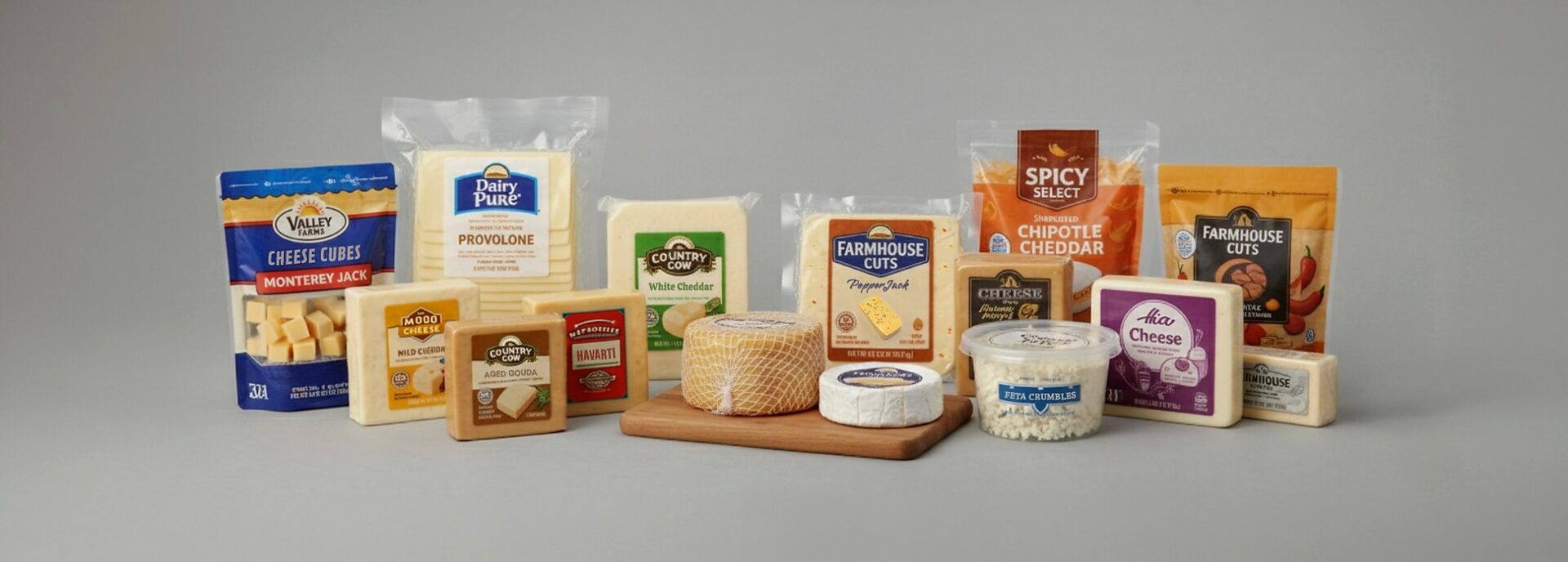
Consumer demand for high-protein snacks and convenient, multi-format cheese products continues to drive rapid SKU expansion across the category. Whether it is shredded, cubed, or snack-sized portions, IPM’s forward-looking engineering approach ensures processors can handle increasing format variety with high-speed precision. Our systems are designed to manage the complexities of flexible and rigid packaging while maintaining the strict hygienic standards and sustained uptime required for profitable cheese production.

Tom Wiersma

IPM Business Development Manager

Improve Uptime Across Your Dairy Operations

Partner with IPM to assess your packaging line and identify opportunities to improve
performance, predictability, and system stability.

Cheese Packaging Automation FAQs

What types of cheese packaging lines does IPM support?

IPM designs integrated packaging systems for a wide range of cheese formats, including block cheese, sliced cheese, shredded cheese, and bagged or wrapped products. Each system is engineered around product behavior, package requirements, and downstream performance.

What makes cheese packaging automation more complex?

Cheese packaging presents unique challenges due to product density variation, moisture content, gas-flushed packages, and limited tolerance for back pressure. These factors require careful coordination across conveying, case packing, and palletizing to maintain stable line performance.

Can IPM Integrate automation into an existing cheese packaging line?

Yes. IPM integrates new automation into existing cheese packaging lines, including case packing, palletizing, and controls upgrades. Systems are designed to align with existing equipment while improving overall line performance.

Scroll to Top