



Integrated Packaging Automation for Yogurt & Cultured Products

Cultured dairy lines demand precise coordination across
product flow, sanitation, and controls.

Integrated Packaging Automation for Yogurt & Cultured Products

Cultured dairy lines demand precise coordination across product flow, sanitation, and controls.

Overcoming Cultured Dairy Line Challenges

Yogurt and cultured dairy packaging require precise coordination across every downstream process. Product viscosity, fill temperature, cup geometry, and sanitation requirements define what equipment must accommodate. As an OEM-neutral integrator, IPM engineers packaging automation into a single, high-performance line 

CHALLENGE
THE IPM SOLUTION

Cup Instability

Tapered cup designs create back pressure that causes wedging, jams, or spills at higher speeds.

Stable Flow Control

Hold-down rails, precision controls, and accumulation logic keep cups upright and product moving smoothly across the line.

Slow SKU Changeovers

Mechanical adjustments between cup sizes delay production more than recipe changes.

Repeatable Setups

Consistent setups and accessible tooling reduce adjustment time and maintain steady line performance during SKU changes.

Filler Constraint

The filler governs line behavior, creating instability if downstream equipment does not respond predictably during cleaning or adjustment.

Synchronized Controls

Centralized PLC control coordinates machine centers, preventing isolated automation and preserving line stability.

Sanitation Demands

Cultured dairy packaging requires open-frame, stainless-steel construction to allow full washdown and easy access.

Hygienic Design

Sanitation-ready conveyor frames and components enable frequent washdown while maintaining durability and accessibility.

Thermal Exposure

Extended hold times or warm conditions can compromise product quality and seal integrity.

Controlled Accumulation

Engineered accumulation, including first-in, first-out (FIFO) flow, maintains temperature control and safeguards quality.

Scalability Limits

Adding lines or facilities often exposes gaps in documentation, controls, or equipment design that impact uptime.

Standardized Systems

Consistent controls, documentation, and design standards allow proven performance to be replicated across facilities.

Unverified Performance

Systems can miss performance targets at startup without clear validation under real production conditions.

Startup Validation

IPM validates each line through a Site Acceptance Test (SAT) or Full System Guarantee before release to production.

Cup Geometry
& Line Stability

Tapered cup designs create back pressure that can cause wedging, jams, or spills at higher speeds. IPM engineers hold-down rails, precision controls, and accumulation logic that help keep cups upright and product moving smoothly across the line.

Repeatable Steps

Frequent SKU
Changeovers

Mechanical adjustments between cup sizes delay production more than recipe changes. IPM engineers consistent setups and accessible tooling that make size changeovers faster and maintain steady line performance.

Synchronized Controls

Filler Coordination
& Stability

The filler is typically the most complex machine center on a cultured dairy line. Any pause for cleaning or adjustment requires downstream machine centers to respond predictably to protect product quality. IPM’s centralized PLC control prevents the islands of automation that limit line stability in poorly integrated systems.

Controlled Accumulation

Temperature
& Product Loss

Extended hold times or warm conditions can cause cultured dairy products to spoil or compromise seal integrity. IPM designs accumulation and product flow strategies that maintain temperature control, typically on a first-in first-out basis, to protect product quality throughout the packaging process.

Hygienic Design

Hygienic Design
& Washdown

Cultured dairy packaging demands open-frame, stainless-steel construction to allow full washdown and easy access. IPM’s conveyor frames and hygienic components, first developed in the late 1990s for dairy cleanability, continue to set the standard for modern sanitary design.

Startup Validation

Enterprise Scalability
& Validation (SAT)

IPM standardizes documentation and design across facilities to ensure proven performance is easily replicated as you scale. Every installation is verified through a Site Acceptance Test (SAT) or Full System Guarantee, confirming that uptime and product flow meet specifications before production handoff for predictable enterprise-wide operations.

IPM in Action: Block Cheese Line

A cheese producer needed to merge two lines while protecting deformable 40 lb blocks and meeting strict weighing, labeling, and palletizing requirements within a tight footprint. IPM engineered a unified system with gentle handling, accurate manifest tracking, heavy-payload robotic palletizing, and automated labeling

Engineer Performance into Every Line

The System Behind Line Performance

OEM-Neutral Integration

Equipment is selected to meet defined system requirements, so each machine center supports line performance without compromise.

V-Curve System Design

Performance requirements are defined first and validated against real-world system behavior before production.

Performance Guarantee

Defined scope, disciplined execution, and structured startup testing ensure system performance aligns with agreed requirements.

EQUIPS Training

Customized, role-based training builds operator competency to sustain line performance and maximize uptime.

training

Trends Shaping Yogurt and Cultured Dairy Packaging

Consumer demand for protein-rich products and single-serve dairy continues to grow across yogurt and cultured categories. IPM’s forward-looking engineering approach ensures processors remain ready for new materials, formats, and market require-ments while maintaining hygienic operation, reliability, and sustained uptime.

Tom Wiersma

IPM Business Development Manager

Improve Uptime Across Your Dairy Operations

Partner with IPM to assess your packaging line and identify opportunities to improve
performance, predictability, and system stability.

Yogurt and Cultured Dairy Packaging FAQs

What products fall under yogurt and cultured dairy packaging?

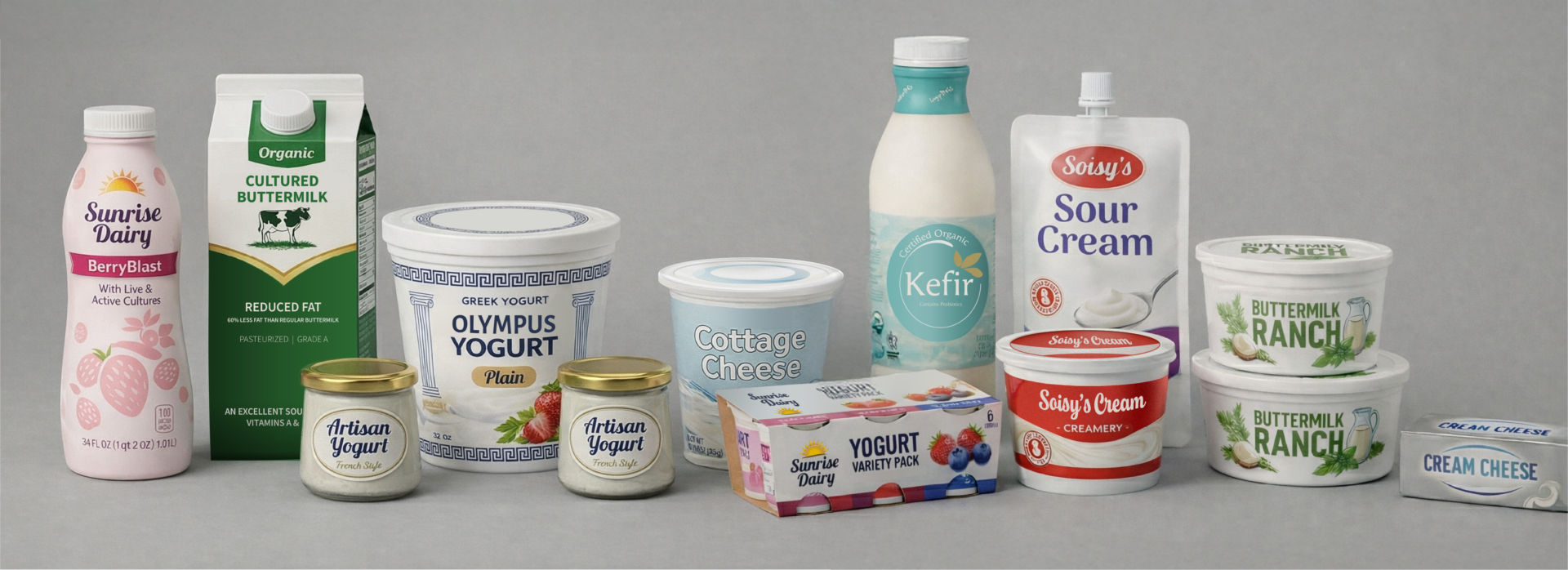
Yogurt and cultured dairy packaging typically includes products such as yogurt, Greek yogurt, cottage cheese, sour cream, cream cheese, buttermilk, and kefir. While formulations vary, these products share common packaging challenges related to viscosity, temperature control, sanitation, and downstream handling.

How does packaging differ across yogurt, cottage cheese, and other cultured dairy products?

Packaging requirements vary based on product viscosity, particle content, fill temperature, and container geometry. For example, cottage cheese requires gentler handling than smooth yogurt products, while higher-viscosity items such as Greek yogurt or cream cheese place different demands on flow control, accumulation, and sanitation design.

How are consumer trends shaping yogurt and cultured dairy packaging?

Consumer demand for protein-rich products and single-serve formats continues to influence yogurt and cultured dairy packaging. These trends increase the need for flexible line design, hygienic operation, and integrated systems that can adapt to new materials and formats.

Scroll to Top